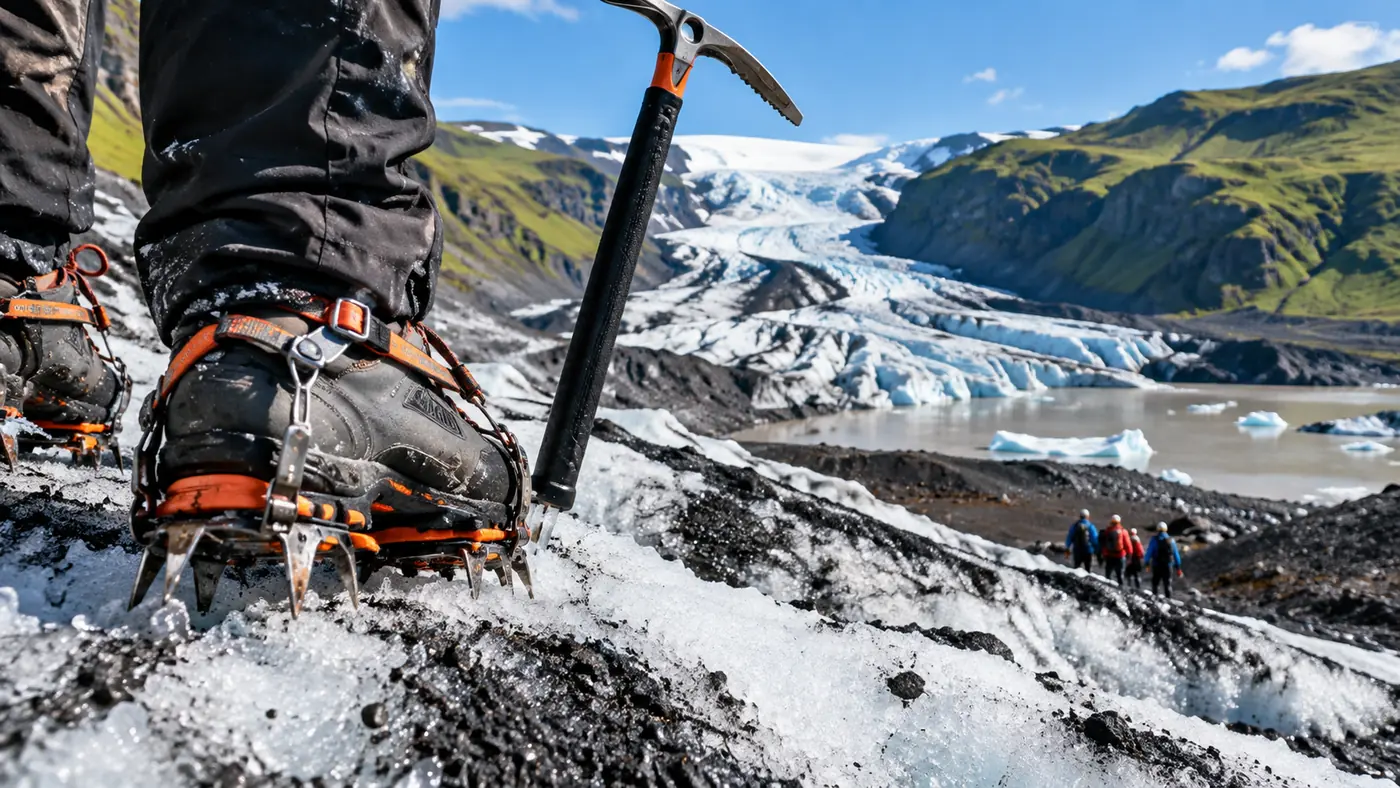
Booking choice: The glacier hike day trip from Reykjavík, from $190 per person. Check dates Tour details
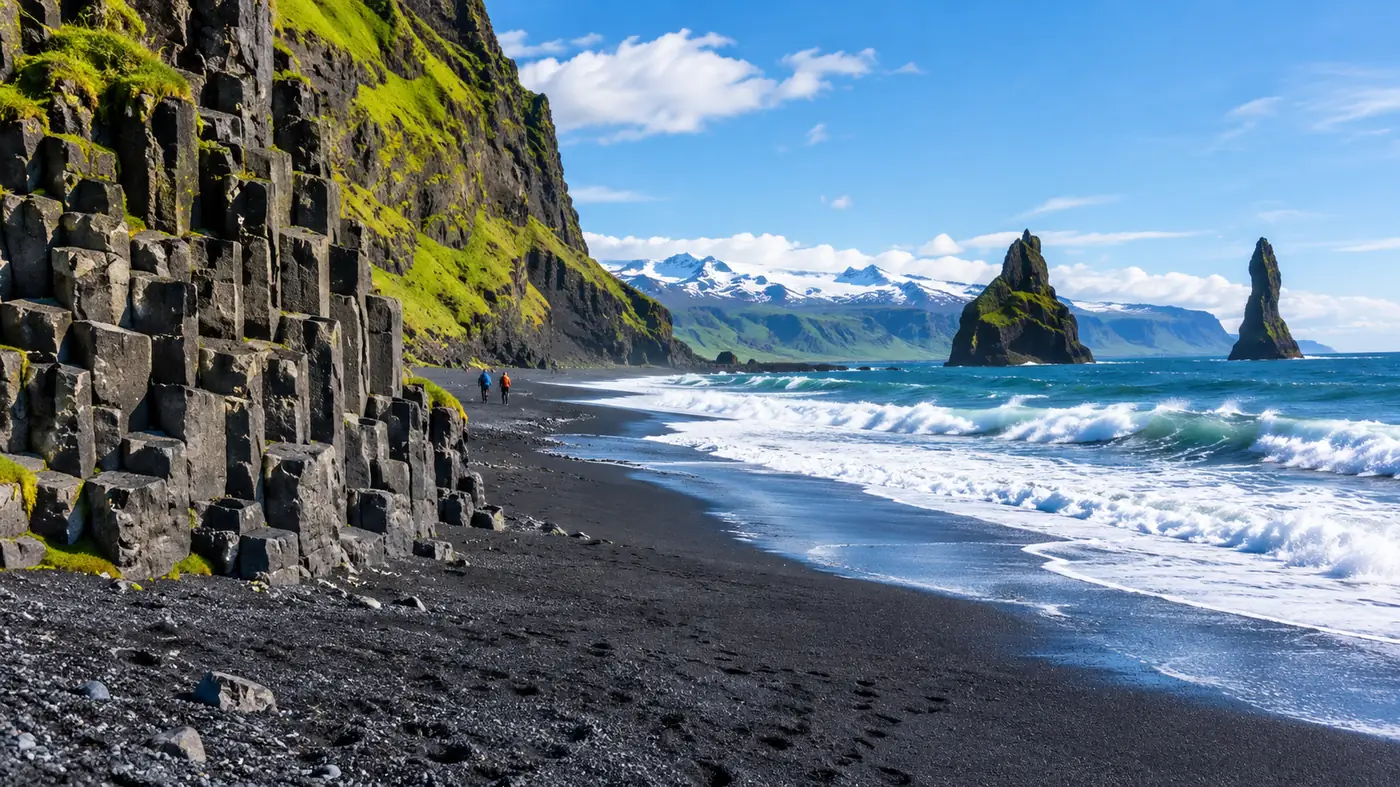
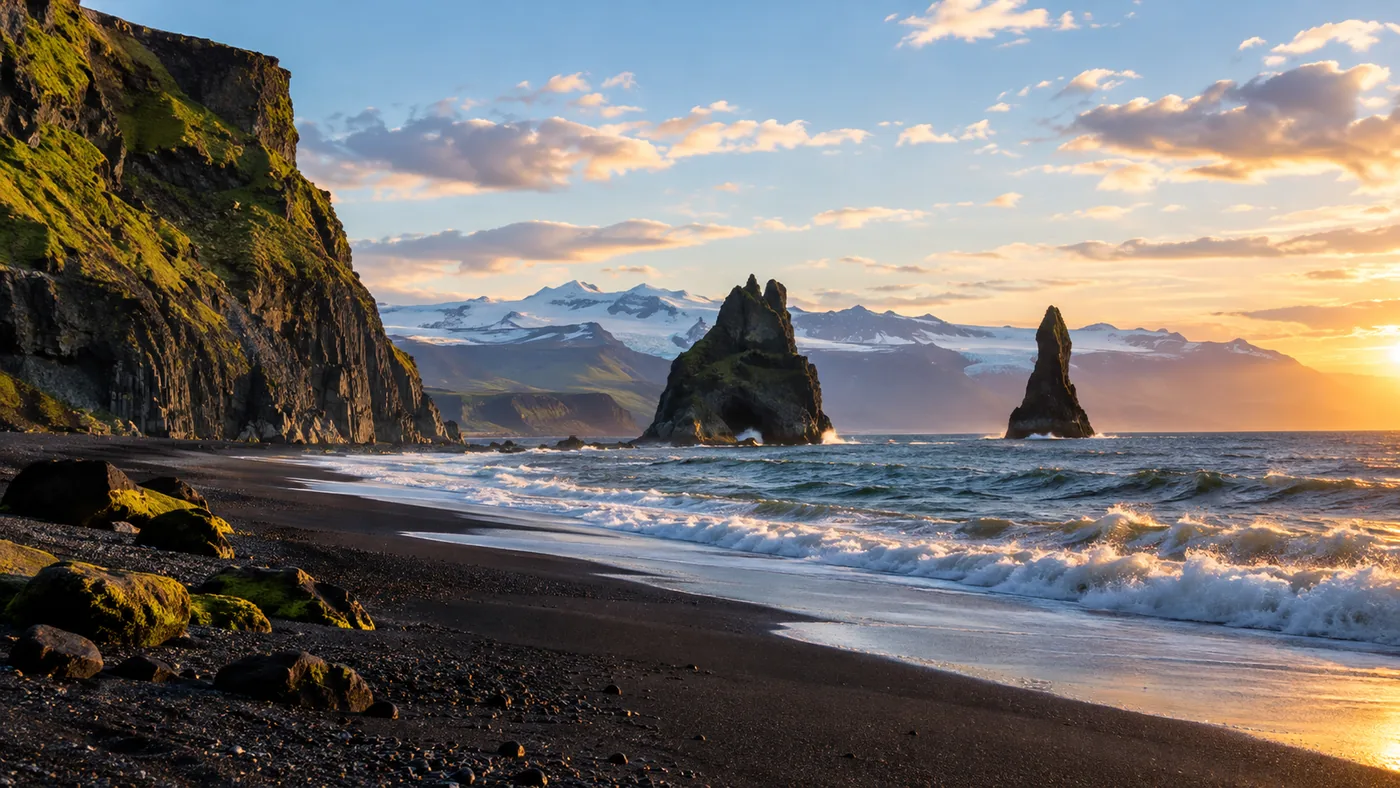
The view is the reason everyone stops: black sand, the basalt columns and the Reynisdrangar sea stacks, up to 66 m tall. The waves are the reason people die here.
This post covers how the sneaker waves work, how to read the warning sign at the car park, what the authorities changed after a child died in August 2025, and how to fit the beach into a day with the glacier hike.
The quick answer
Reynisfjara has strong waves and rip currents, and some waves run far further up the beach than the rest, without warning. Since 2022 a light sign at the entrance, linked to the Icelandic Road and Coastal Administration's wave forecast, shows green, yellow or red: on yellow, stay out of the yellow zone; on red, do not go past the sign. After a 9-year-old girl died on 2 August 2025 under a yellow light, the red threshold was lowered, and on red the basalt columns and Hálsanefshellir cave are off-limits. Stay well back from the wet sand, never turn your back on the sea, and keep children by the hand.
Why is Reynisfjara beach dangerous?
Because of sneaker waves: every so often one wave runs much further up the steep beach than those before it, and the backwash and rip currents pull people into very cold, rough water. Visit South Iceland warns never to go into the water.
The beach drops off steeply, and the open North Atlantic has nothing to slow it down before it reaches the sand. Most waves stop where you expect. A bigger one arrives without a sign, covers the dry sand in seconds and drags back hard. People get knocked over while taking a photo with their back to the sea.
Iceland Monitor (mbl.is) counted six fatal accidents at the beach this century, four of them drownings. The last three, in 2021, 2022 and 2025, all happened by the basalt columns, the spot people walk past to reach Hálsanefshellir cave. There are no lifeguards and no staff on the beach.
How does the Reynisfjara warning light system work?
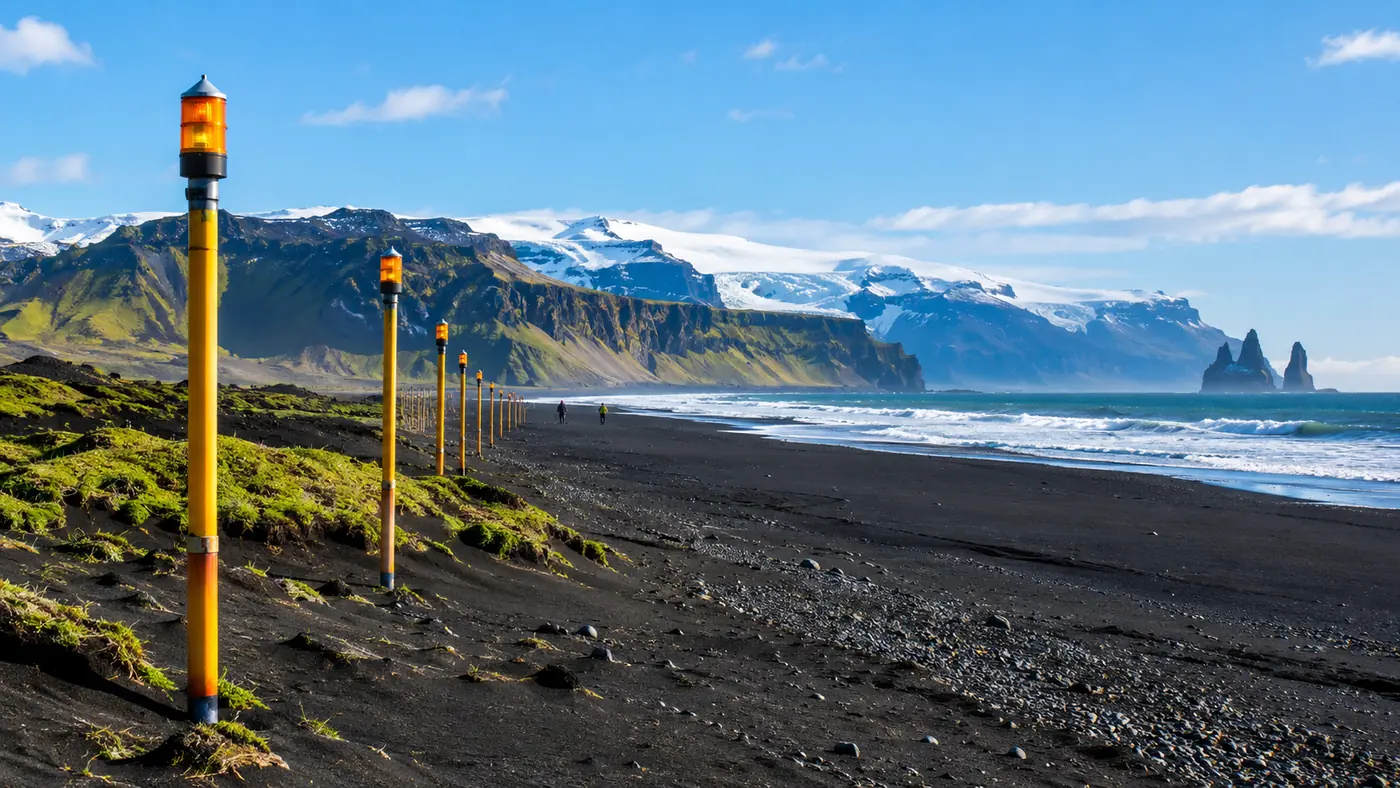
A light sign at the entrance path, installed in 2022, is connected to the Icelandic Road and Coastal Administration's automatic wave forecast. It shows the danger level for the beach zones marked on the board beside it.
The Icelandic Tourist Board announced the finished system on 16 December 2022. It divides the beach into zones by danger. On yellow, you must not enter the yellow zone. On red, you must not enter the red zone or walk beyond the light sign; watch from the beach ridge instead, where the waves are a safe distance away. The beach itself never shuts. Police cameras on a mast stream images to the station in Selfoss, and a chain along the car park leads you past the signs.
The light is a forecast, not a promise. Green means little danger, not none: stay back from the wet sand on any colour.
| Light | Danger level | What you do |
|---|---|---|
| Green | Little danger | Walk the beach, still well back from the waterline |
| Yellow | Moderate danger | Do not enter the yellow zone marked on the sign board |
| Red | High risk | Do not go beyond the light sign; watch from the beach ridge. Since August 2025 the basalt columns and Hálsanefshellir cave are off-limits on red |
What changed at Reynisfjara after August 2025?
The red light now comes on sooner. After a 9-year-old girl was swept out on 2 August 2025, under a yellow light, the hazard index was recalibrated, and on red the basalt columns and Hálsanefshellir cave are off-limits.
The landowners, the Icelandic Tourist Board, the South Iceland Police, Safetravel and the Víkverji rescue team met on 5 August 2025 and agreed the change. Iceland Monitor reported that the wave index would account for sea level, beach width and whether waves reach the basalt columns, so the red light triggers earlier than before. On red, access is blocked at the viewing platform on the beach ridge, and a gate was planned there.
For a visitor, it means the red light will show more often than in past years. Take it seriously: on a red day, the beach is a view from the ridge.
A day from Reykjavík with the glacier hike, Seljalandsfoss and Reynisfjara: the guide knows the beach.
Check dates for the glacier hike day trip from ReykjavíkWhat are the rules for visiting Reynisfjara safely?
Obey the light sign, stay well back from the highest line of wet sand, never turn your back on the waves, keep off the rocks by the sea, and never go in after someone.
- Read the light at the entrance and the zone board next to it before you walk down.
- Keep far back from the waterline. Reykjavik Excursions advises checking where the water has reached on the sand and staying further away than that.
- Face the sea for photos and selfies, and keep watching it while you walk.
- Stay off the basalt columns and rocks near the water. They are slippery, and this is where the recent accidents happened.
- Skip the cave when the waves are reaching the columns.
- Do not go into the water, not even to paddle.
- Never attempt a rescue. Call 112.
Is Reynisfjara safe for children?
Yes, from the beach ridge and with a hand held. Keep children well away from the waterline and the basalt columns; small children cannot outrun a sneaker wave and are easily knocked over.
The August 2025 accident happened to a child near the columns, and her father and sister were caught by the same wave. With kids, treat the yellow zone as red. Walk the upper beach, look at the stacks from there, and do the climbing on the columns in your head.
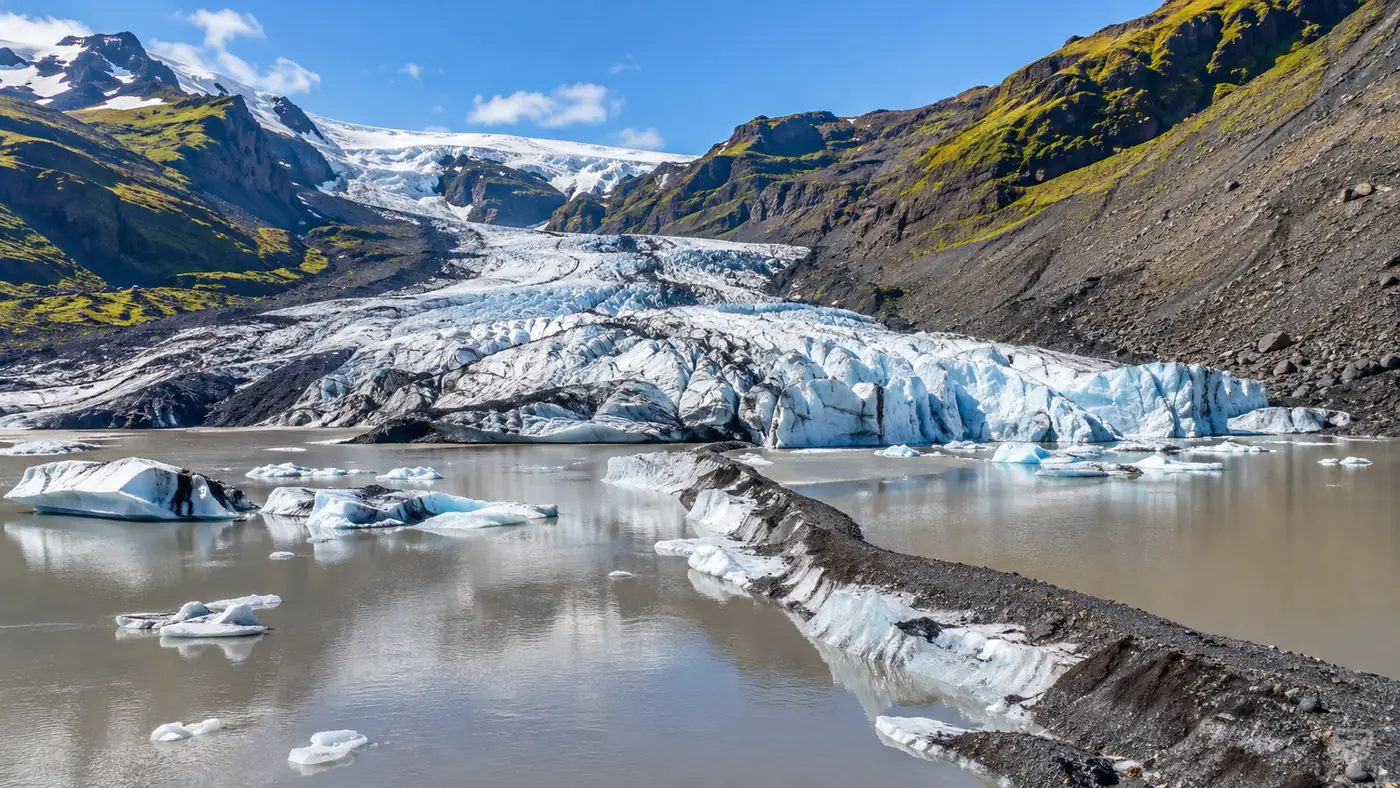
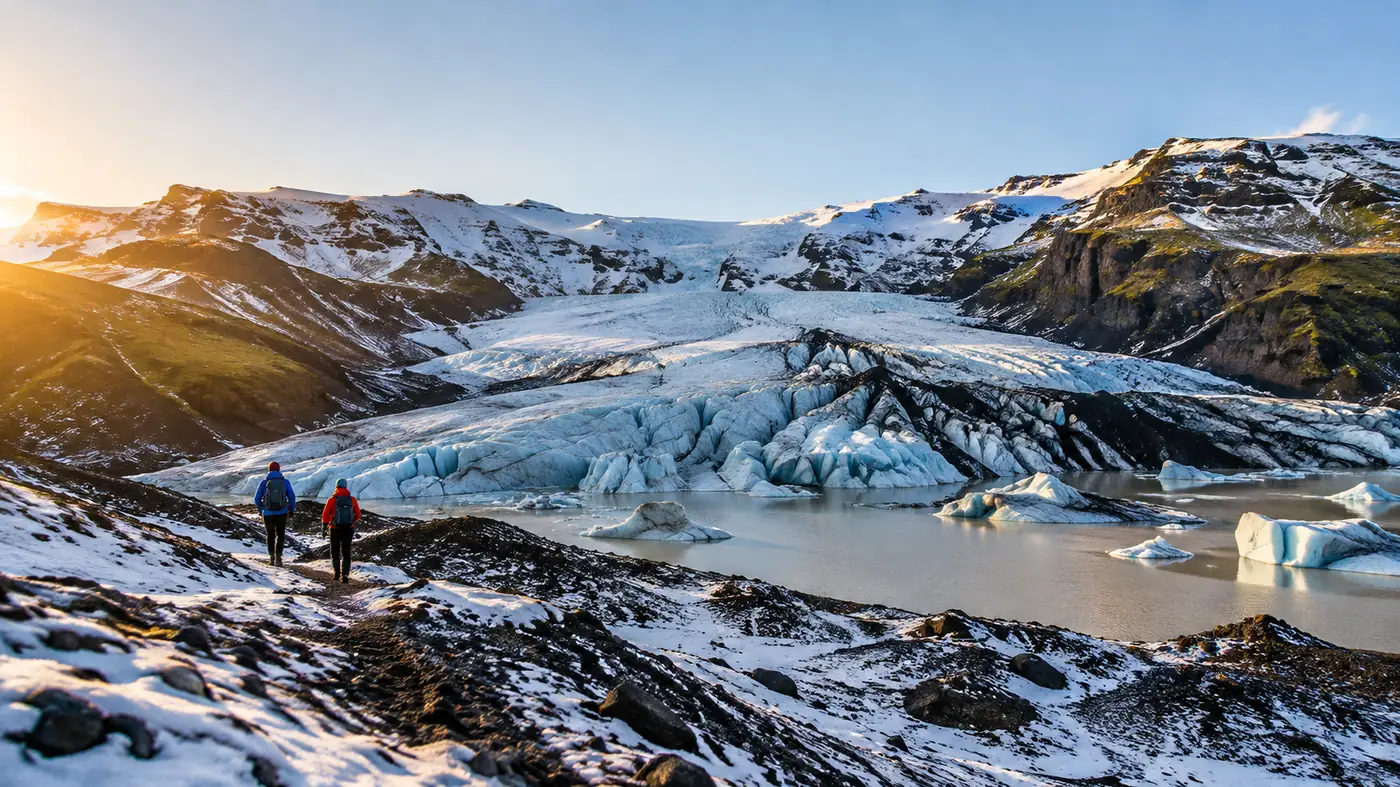
Families on the South Coast often pair the beach with a gentler glacier trip. The glacier edge walk at Sólheimajökull takes all ages with no crampons, and the Katla ice cave tour from Vík starts at age 6.
How do you combine Reynisfjara with the Sólheimajökull hike?
Easily: Reynisfjara is on the way from the glacier to Vík, so it fits after the hike. The day trip from Reykjavík stops there; self-drivers turn off Route 1 just west of Vík.
Sólheimajökull is about 30 km from Vík, roughly half an hour, with Dyrhólaey and Reynisfjara between the two. Hike first, while the light is good, then the beach in the afternoon. In winter that means arriving close to dusk, which is one more reason to stay high on the sand.
The day trip from Reykjavík runs about 11 hours with the hike, Seljalandsfoss and a stop at Reynisfjara, for ages 10 and up. Driving yourself? Our Reykjavík guide has the route, the parking and the timings, and our winter post covers the short days.
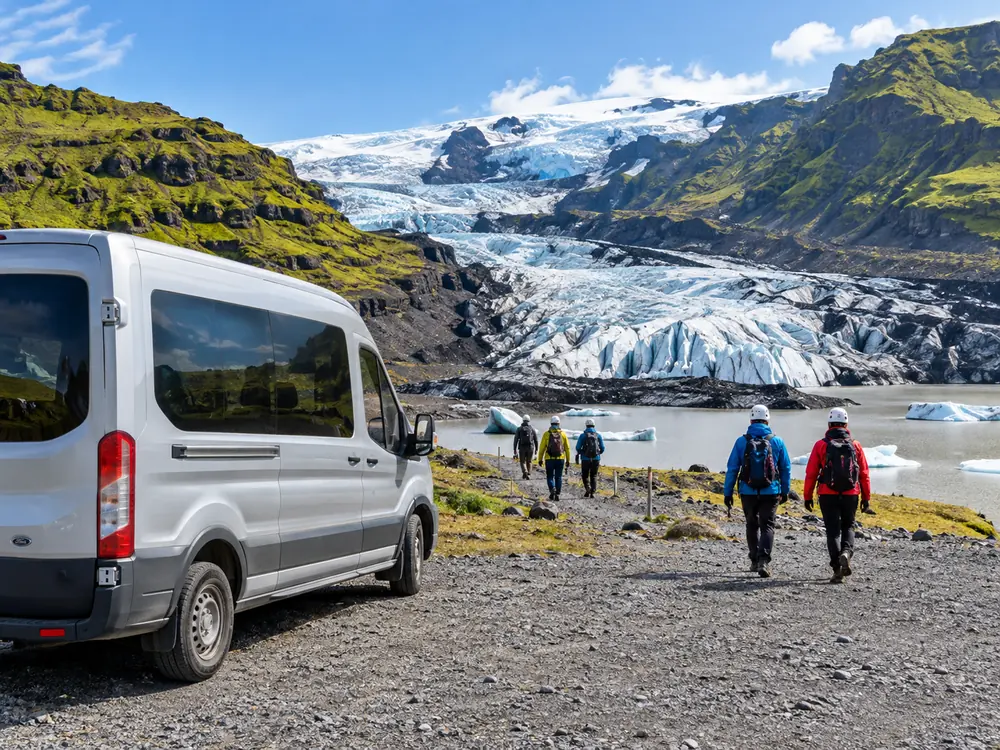
The glacier hike, Seljalandsfoss and Reynisfjara in one 11-hour day from Reykjavík, with crampons, harness, axe and helmet.
Explore the glacier hike day trip from Reykjavík Tour detailsFrequently asked questions
Why is Reynisfjara dangerous?
Sneaker waves run far up the steep beach without warning, and strong backwash and rip currents pull people into cold, rough water. Six fatal accidents have happened there since 2000.
What do the warning lights at Reynisfjara mean?
Green: little danger. Yellow: do not enter the yellow zone. Red: do not go past the light sign. Since August 2025 the red light comes on sooner and the basalt columns are off-limits on red.
When was the Reynisfjara warning system installed?
In 2022. The Icelandic Tourist Board announced the finished signs on 16 December 2022; the light is linked to the Icelandic Road and Coastal Administration's wave forecast.
Does the Sólheimajökull day trip from Reykjavík stop at Reynisfjara?
Yes. The 11-hour day trip combines the guided glacier hike with Seljalandsfoss and Reynisfjara black beach, for ages 10 and up.
Ready to book
Choose your hike
Free cancellation up to 24 hours before on every option. Prices are from-prices in USD and move with the season.
Glacier Hike Day Trip from Reykjavík
- Minibus to and from Reykjavík
- Crampons, harness, ice axe and helmet
- Certified glacier guide
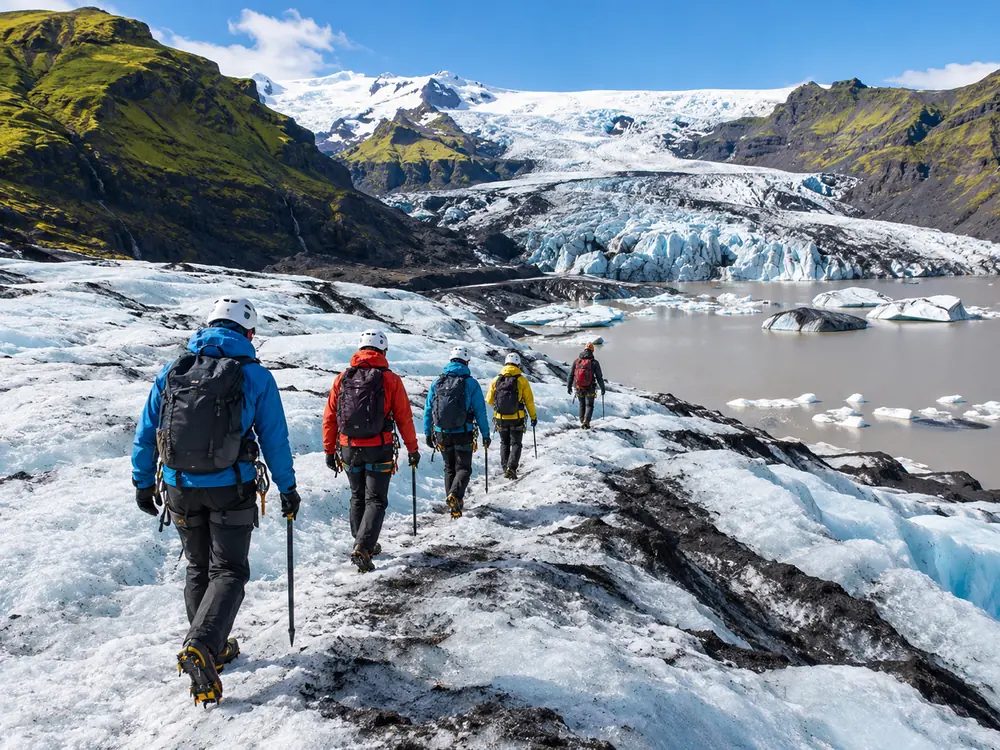
Sólheimajökull Glacier Hike, Meet at the Glacier
- Certified glacier guide
- Crampons, ice axe, helmet and harness
- Small group
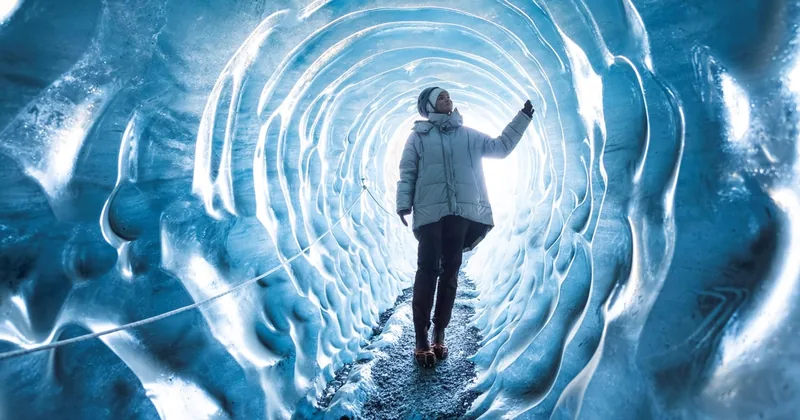
From Vík: Katla Ice Cave & Super Jeep
A black-and-blue ice cave, all year per the listing