Booking choice: The Katla ice cave tour, from $196 per person. Check dates Tour details
Search for ice caves in Iceland and the photos all look alike: glowing blue tunnels, a person with a headlamp, sometimes black stripes of volcanic ash in the ice. Behind the photos are very different trips. One cave is half an hour from the South Coast village of Vík and open in every month. The others are about 4.5 hours east of Reykjavík and close every summer.
This guide sorts out which is which, what happened in the August 2024 collapse and how the rules changed after it, what the Katla tour is really like according to its reviews, and why the blue cave in some glacier hike photos is not something you walk through on Sólheimajökull.
The quick answer
The Katla ice cave is in Kötlujökull, an outlet glacier of Mýrdalsjökull, and tours leave from Vík all year (about 3 hours, from age 6). The famous blue caves are in Vatnajökull National Park near Jökulsárlón; they open for winter, roughly October to April, and close May to September since the 2024 accident. A standard Sólheimajökull hike goes onto the ice, not through a cave.
Where are the ice caves in Iceland?
On the South Coast in two areas: Kötlujökull above Vík (the Katla ice cave) and the outlet glaciers of Vatnajökull, mainly Breiðamerkurjökull near Jökulsárlón.
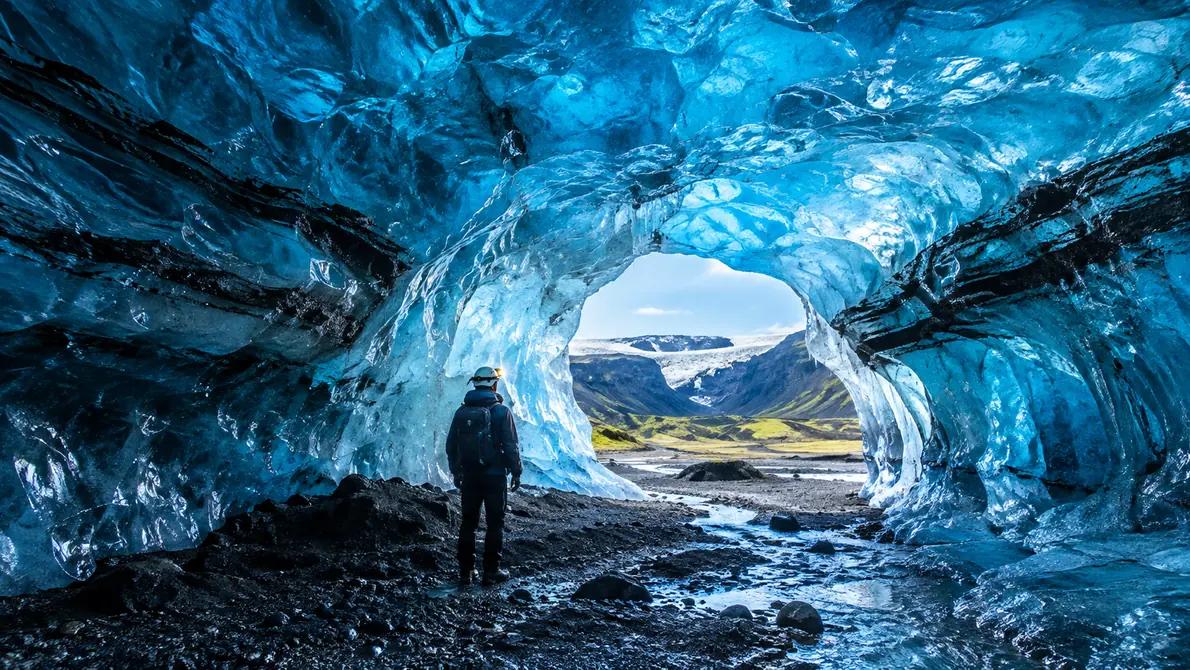
Ice caves form where meltwater cuts tunnels under or through a glacier. They are not fixed attractions with a door and a ticket desk: each season the guides scout which caves are stable, and a cave that was open in March can be gone by the next winter. Tröll Expeditions lists the main areas as Breiðamerkurjökull (the Crystal Blue and Sparkle caves, reached from Jökulsárlón), Falljökull near Skaftafell, and Mýrdalsjökull from Vík for the Katla ice cave. It adds that seasonal caves also form at Skaftafell and Sólheimajökull for a limited time.
| Cave area | Glacier | Start | Season | From Reykjavík |
|---|---|---|---|---|
| Katla ice cave | Kötlujökull (Mýrdalsjökull) | Vík | All year | About 3 hours to Vík |
| Crystal Blue, Sparkle and others | Breiðamerkurjökull (Vatnajökull) | Jökulsárlón area | Roughly October to April | About 4.5 hours |
| Blue ice cave at Falljökull | Falljökull (Vatnajökull) | Skaftafell area | Winter | Over 4 hours |
| Seasonal caves | Sólheimajökull | Glacier car park | Only when one forms | About 2 to 2.5 hours |
Is there an ice cave on the Sólheimajökull glacier hike?
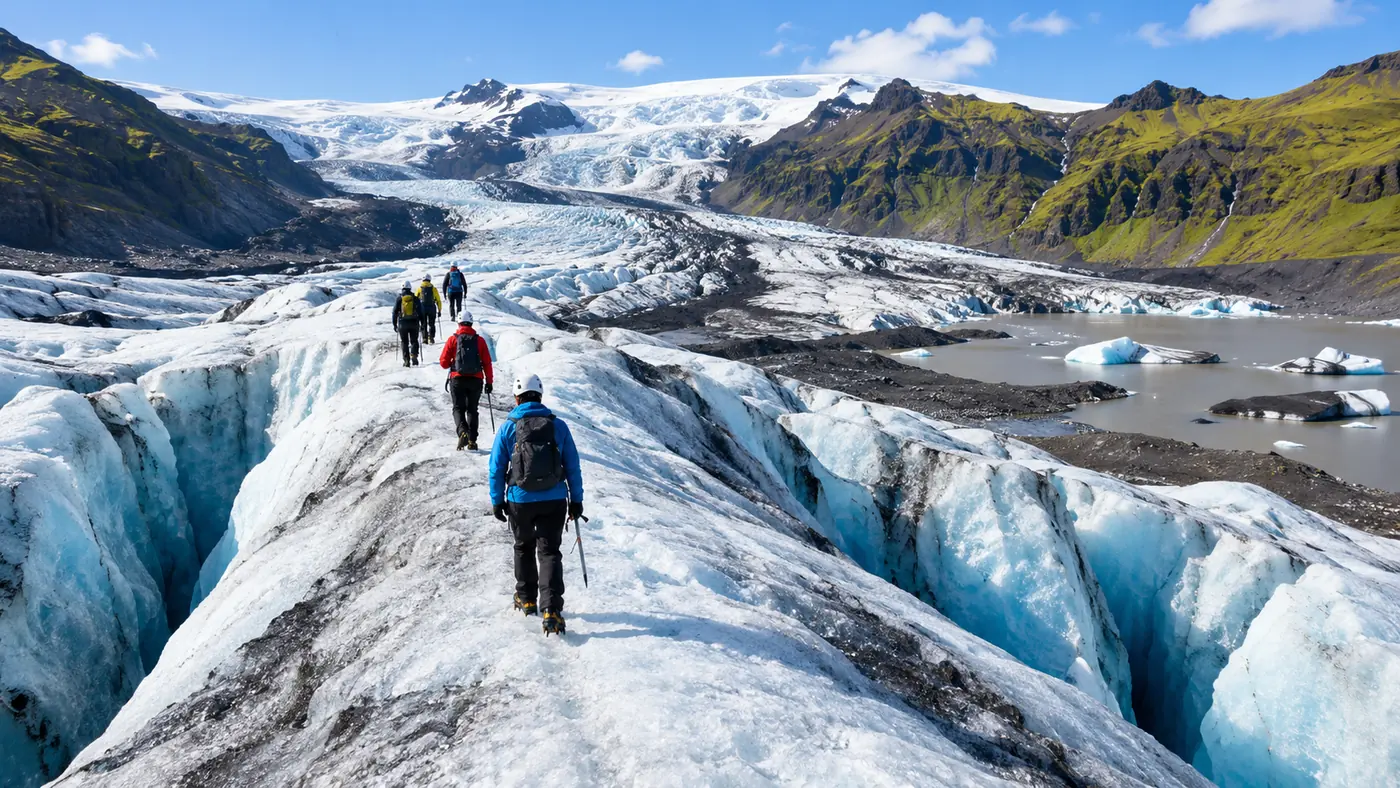
Not as part of a normal hike. You walk onto the glacier with crampons; you do not go through a cave, even if a listing photo shows one.
A guest on the Arctic Adventures hike put it plainly in October: "the pictures show people walking through a cave with blue ice [...] this does not happen on this hike. You go to and onto the glacier, but not through a cave." She still rated it 10 out of 10. What you do get is ash-striped ice, crevasses, moulins and a guide who knows the glacier; our Sólheimajökull hike guide walks through it step by step.
Small caves and openings do form on Sólheimajökull, and some guides show one when it is safe. Ann-Sophie wrote in September that her group "saw an ice cave and glacier crevasses". Treat that as luck, not a promise. Icelandia also sells a separate Sólheimajökull hike with a blue ice cave, run only when its guides find one, per the listing. If a cave is the point of your trip, book a cave tour.
In 2026 there is one more reason not to expect extras: since the Met Office warning of 22 July 2026, operators decide each day which route on the ice is safe. The conditions post explains what changed.
What is the Katla ice cave?
A cave in Kötlujökull, an outlet glacier on the south-east side of the Mýrdalsjökull ice cap, above the Katla volcano. Its ice is banded with black ash from past eruptions.
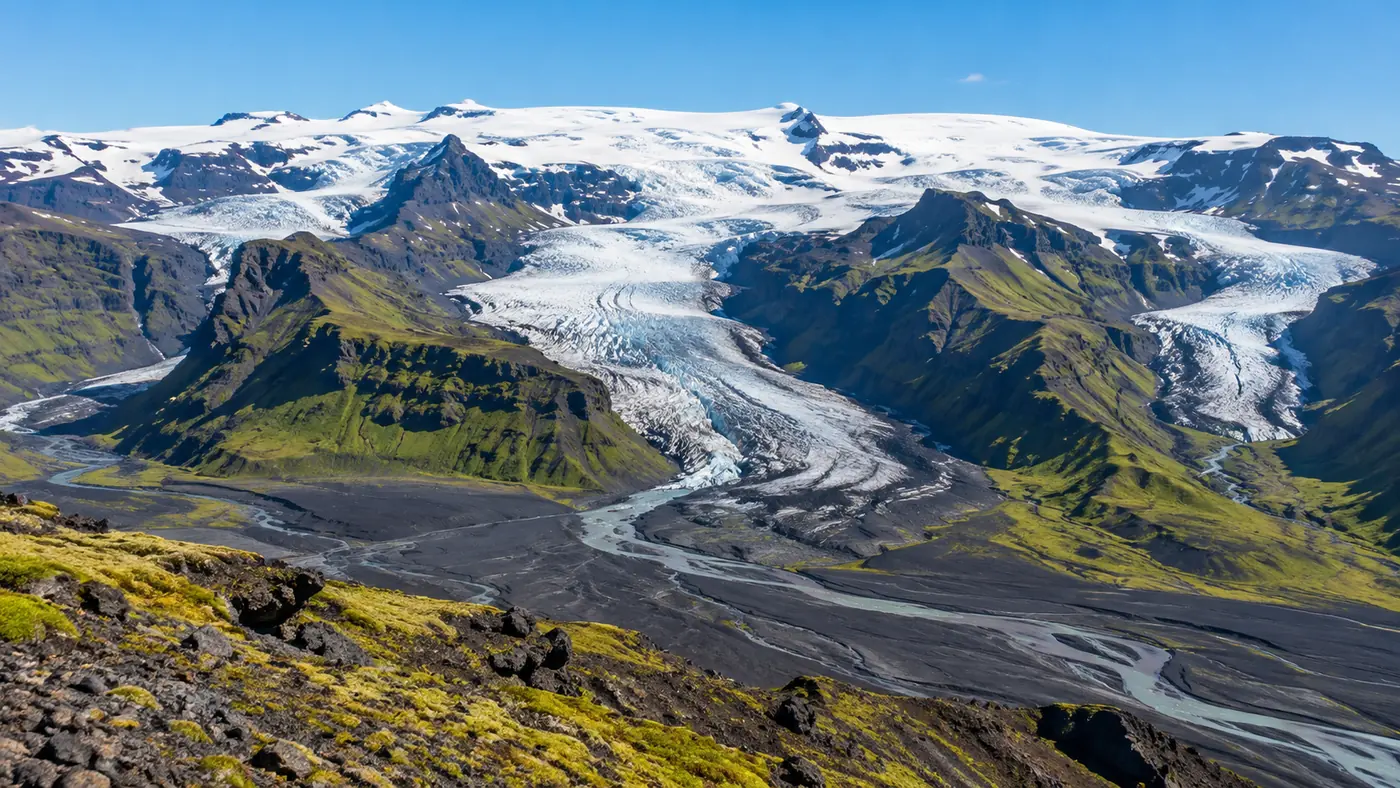
Kötlujökull ends on the black plain of Mýrdalssandur north-east of Vík. Guide to Iceland puts it at about 13 km long, with dark layers of ash from earlier eruptions showing in the ice. That ash is what makes this cave look different: black-and-blue walls rather than the clear sapphire of the Vatnajökull caves.
The volcano under it is one of the most closely watched in Iceland. The Icelandic Met Office says Katla sits under the ice cap in a caldera of 9 by 14 km under up to 700 m of ice, has erupted at least 21 times in 1,100 years and last erupted on 12 October 1918. The Met Office monitors it around the clock with seismometers, GPS and gas sensors, and tour operators follow those warnings. Check vedur.is before you travel.
The cave itself moves. Arctic Adventures says on its listing that it "can look a bit different from week to week (or even day to day)", and the guides take you to the best accessible cave that day.
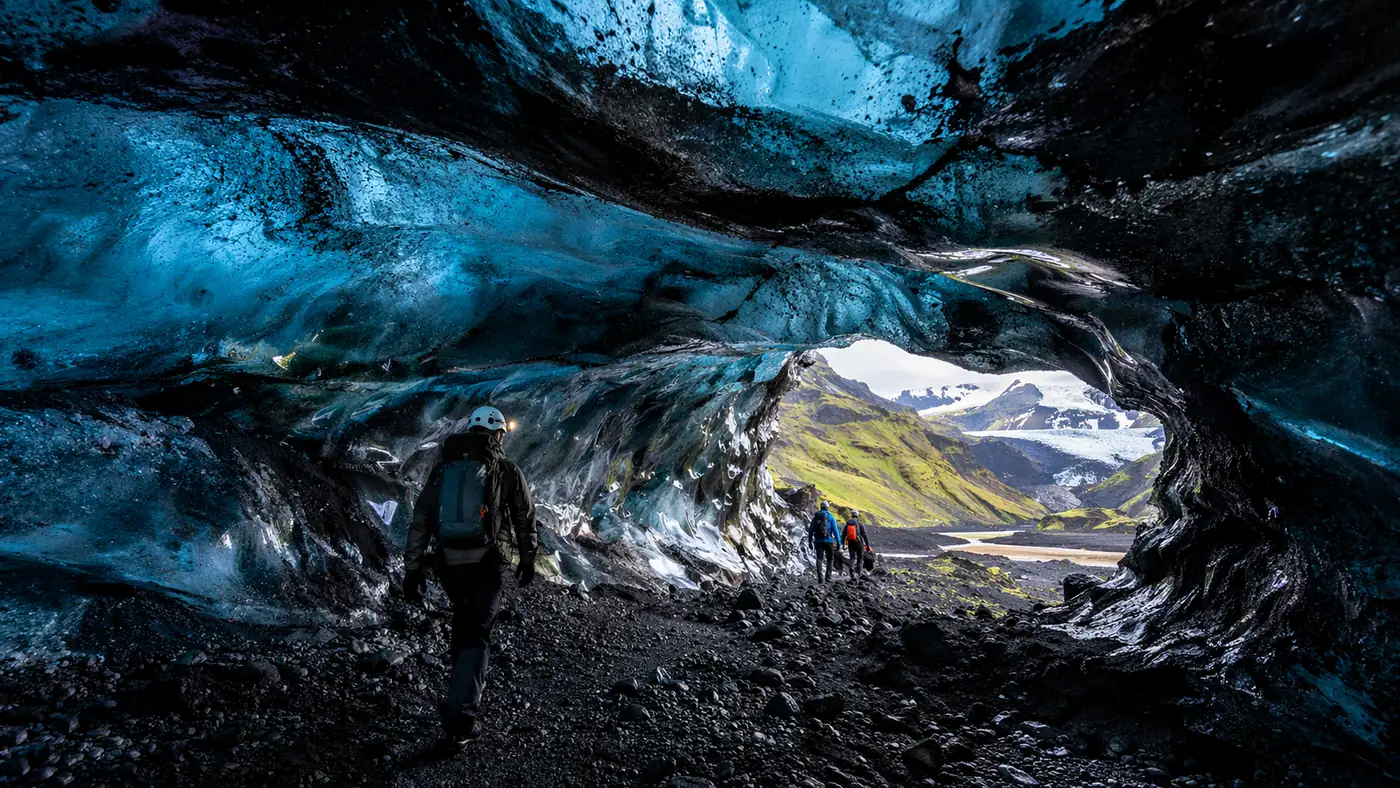
How does the Katla ice cave tour from Vík work?
You meet in Vík, ride a super jeep to the glacier edge, put on crampons and a helmet, walk a short way over the ice and go into the cave. Allow about 3 hours.
On the Arctic Adventures tour the meeting point is the bus parking lot behind the Icewear building in Vík, facing the sea; look for the Arctic Adventures sign and be there 15 minutes early. The super jeep crosses Mýrdalssandur towards the glacier, about 30 minutes each way per the operator, and the off-road ride is half the fun for most reviewers. Then crampons and a helmet go on, a beginner-level walk on the ice follows, and you go into the cave.
- Length: about 3 hours from Vík; there is also a Reykjavík option of about 11 to 12 hours with stops at Seljalandsfoss and Skógafoss.
- Age: from 6.
- Group: up to 14 people.
- Included: the super jeep, a guide, crampons and a helmet.
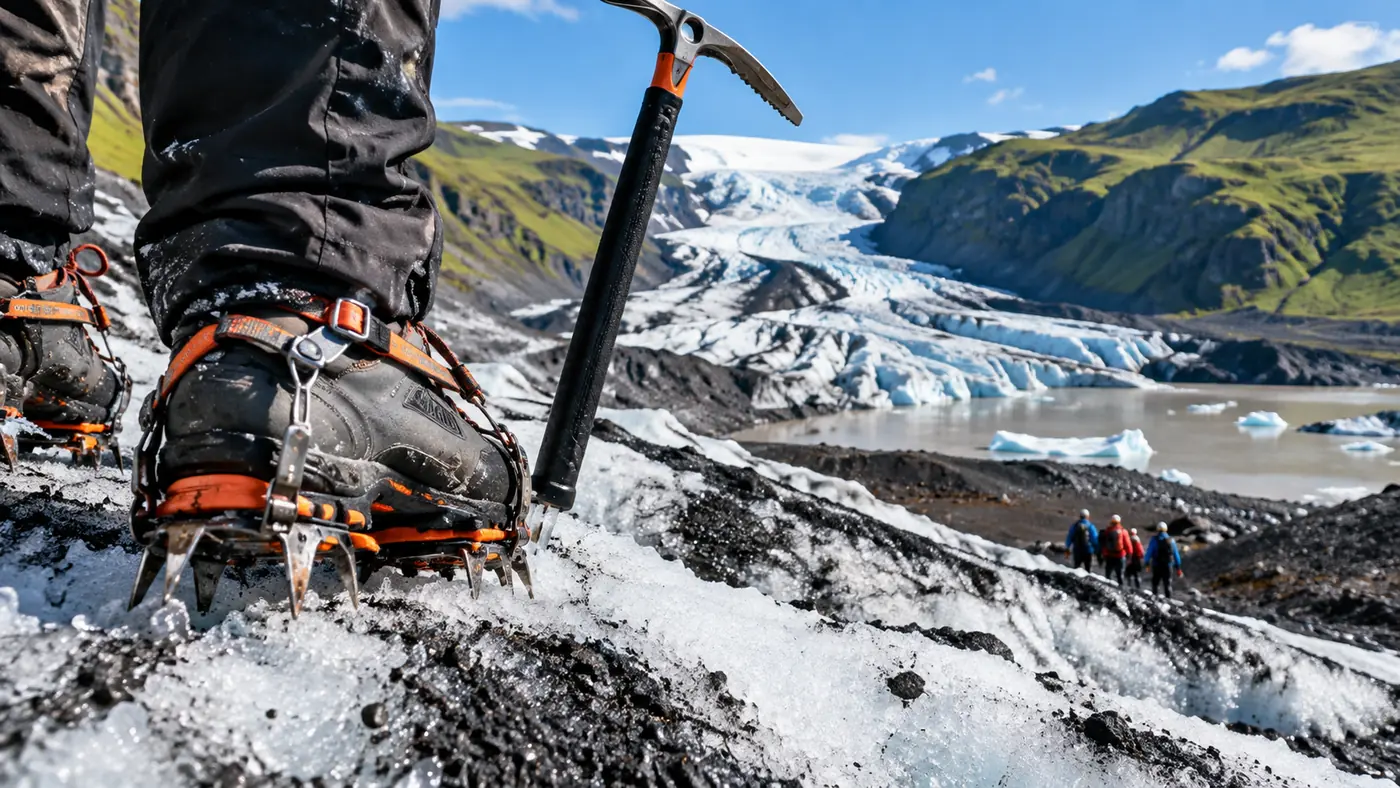
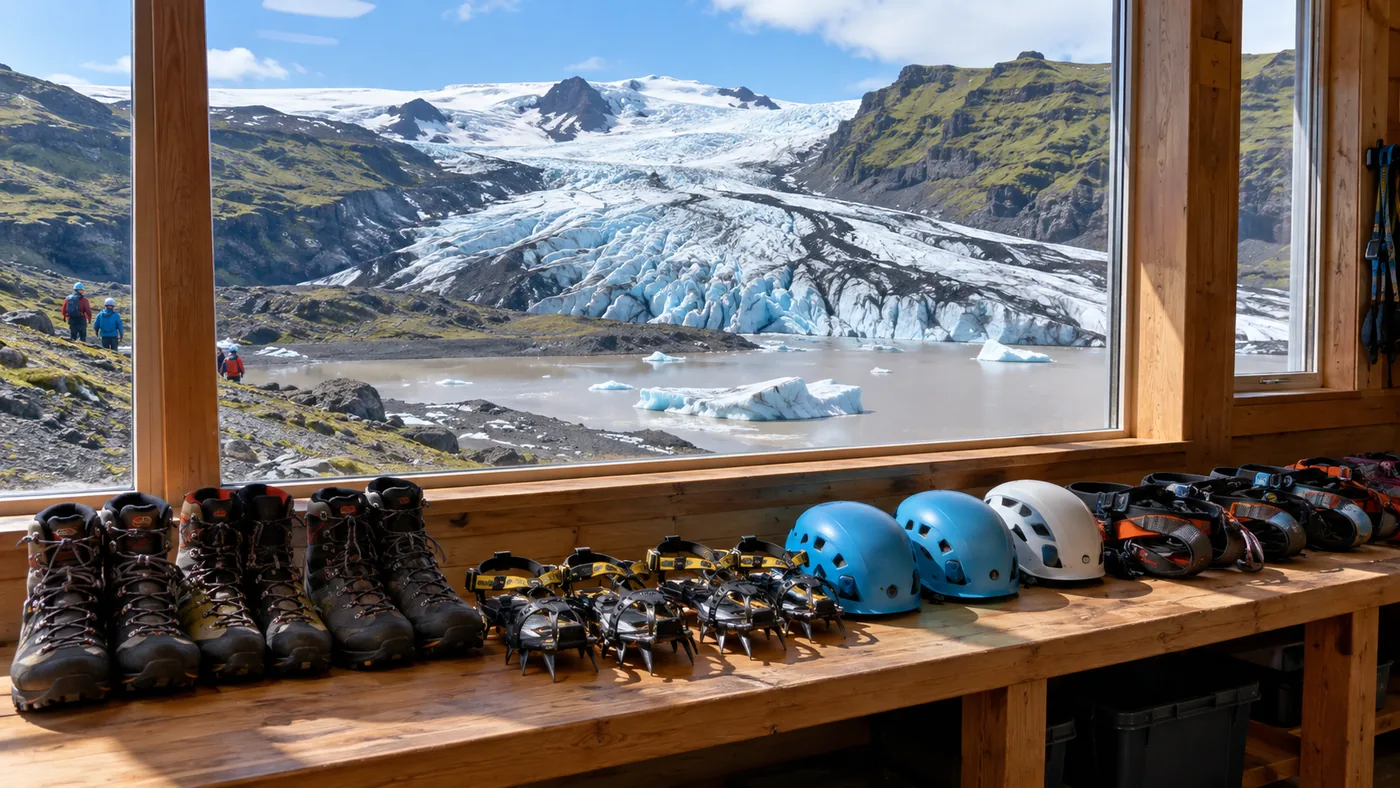
- Bring: warm layers, waterproofs and hiking boots with ankle support; nothing can be rented on site, Arctic Adventures says.
- Not included: food and drinks.
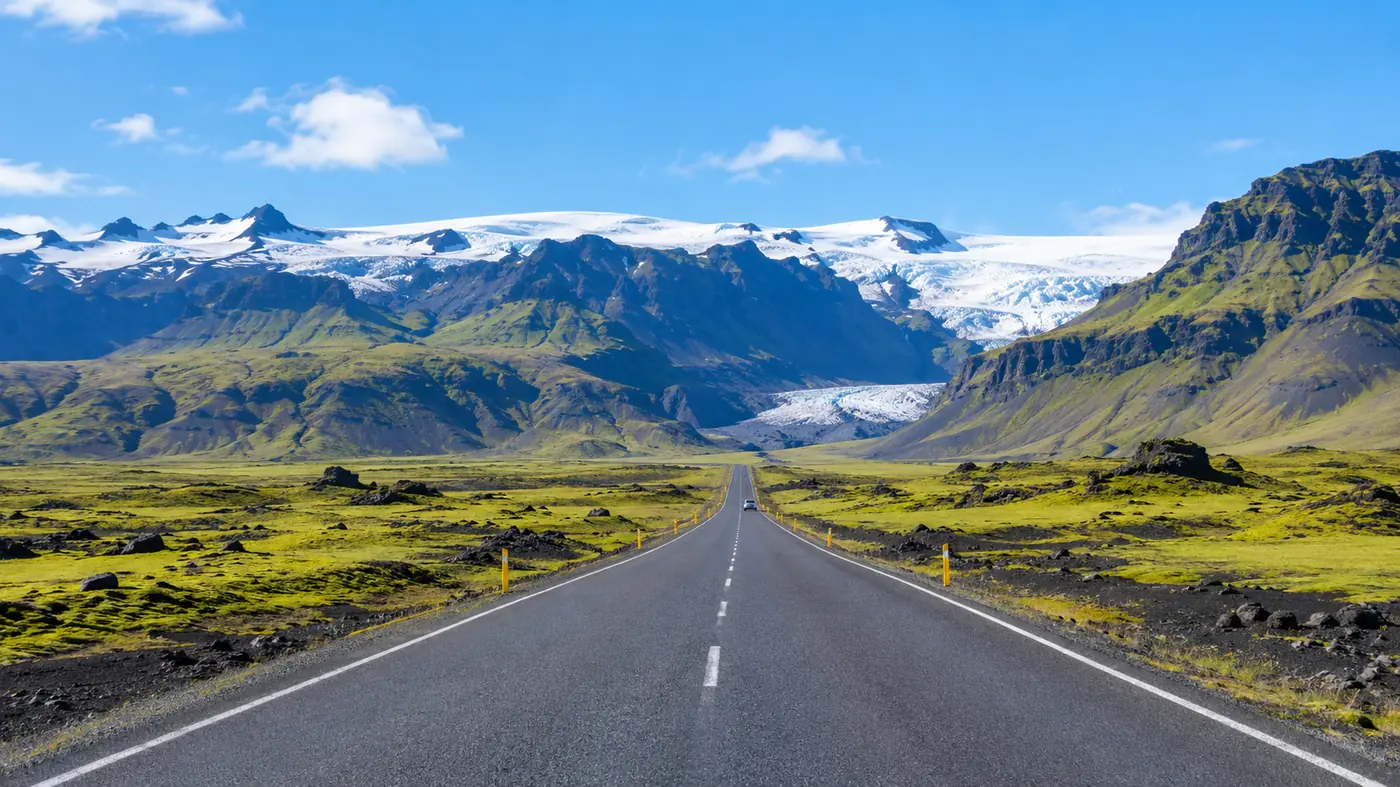
Driving yourself from Reykjavík? Vík is about 3 hours by road, which makes this an easy add-on to a Sólheimajökull day. Our South Coast driving guide has the stops.
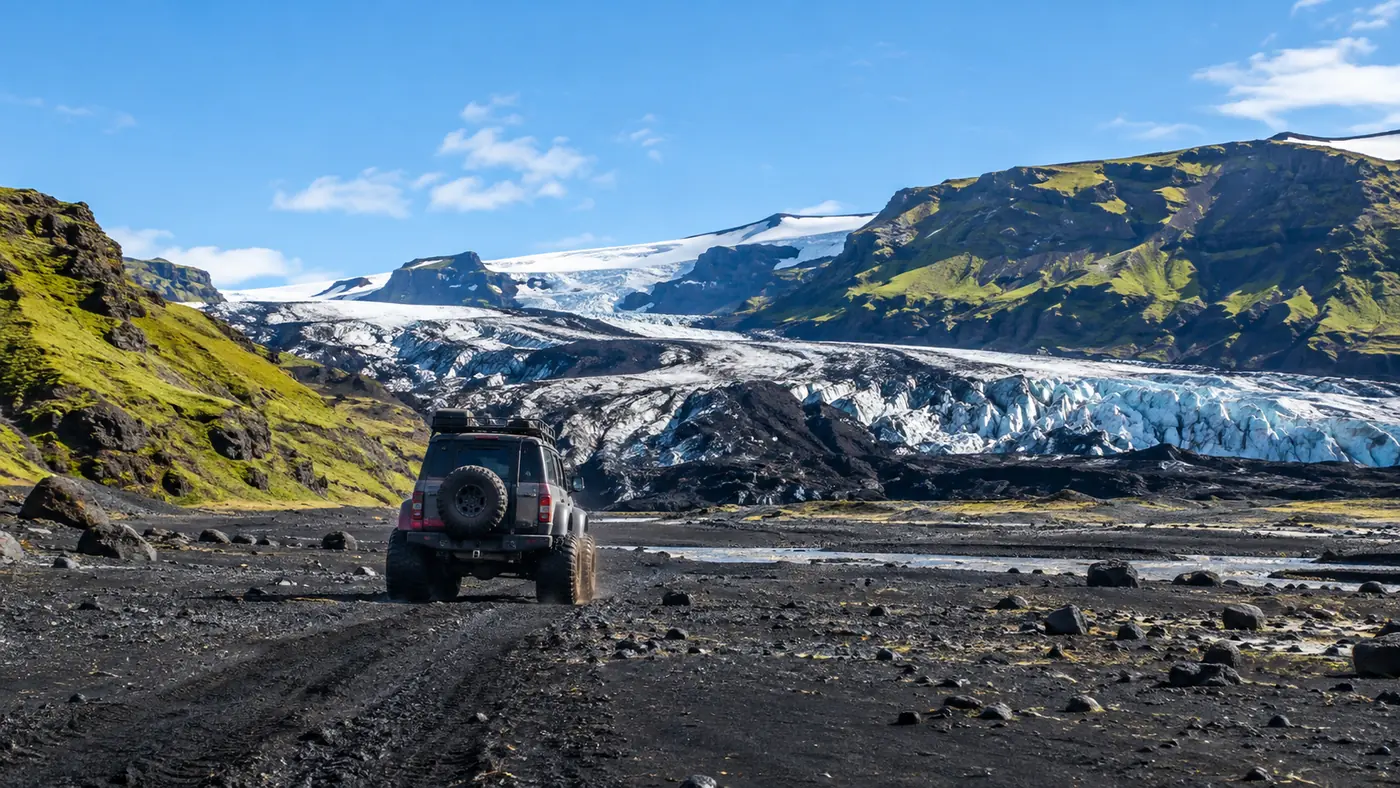
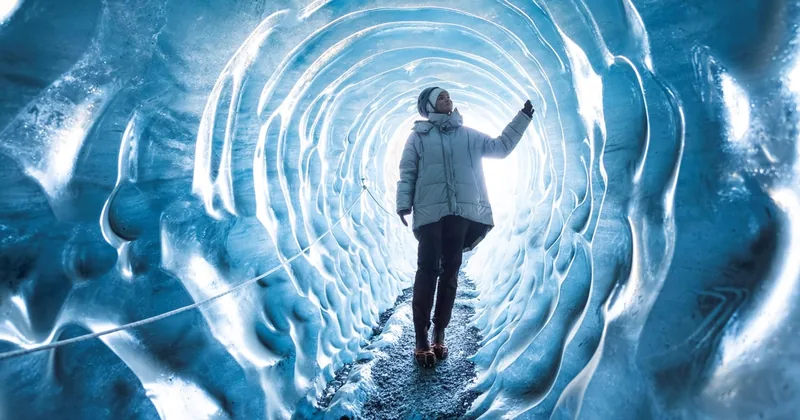
Super jeep from Vík to Kötlujökull, crampons and helmet on, then inside a cave of blue ice and black ash, in any month.
Explore the Katla ice cave tour Tour detailsWhat do reviews say about the Katla ice cave?
Mostly that the super jeep ride and the ash in the ice are the highlights. The tour holds 4.6 out of 5 from 2,642 reviews on GetYourGuide, with 5-star reviews through October 2026.
The recent reviews read like a list of what makes this tour different from a blue cave in Vatnajökull. Analuisa, in October: "I was at first hesitant to book [...] as opposed to a regular blue ice cave but hands down it was the highlight of our trip so far. The super jeep ride over the glacier and the cave itself were amazing. The contrast between the ash and the ice was visually impressive." She took the 3 p.m. slot and saw the sunset over the ice.
Maria called it "a fantastic glacier hike, plus a beautiful cave with lots of blue ice", and almudena booked it as "a fantastic experience for the whole family". Monika went on a grey day and still called it "a unique experience". The honest caveat sits on the listing itself: the cave you visit might not look exactly like the photos. Weather matters too; a wet day on Mýrdalssandur is a wet day.
When are the Vatnajökull ice caves open?
In winter only, roughly October to April, conditions permitting. Since the 2024 accident the caves in Vatnajökull National Park are closed from May to September.
The Reykjavík Grapevine, citing RÚV, reported in September 2025 that the season starts in October and the caves are closed from May through September. Iceland Review reported the same reopening in early October. Tröll describes its Vatnajökull caves as "strictly winter products". Within the season, each cave opens only when the guides judge it safe, so a cold, dry spell is better than a mild, rainy one.
- Who runs them: 30 companies hold contracts with the national park.
- Group size: 8 to 16 guests per guide, depending on the tour type.
- Safety: operators assess each cave daily and share risk information, and the Nature Conservation Agency can cap visitor numbers if queues build up.
- Getting there: Jökulsárlón is about 4.5 hours from Reykjavík and about 3 hours east of Sólheimajökull.
Winter on the South Coast means short days: about 4 hours of daylight in late December. The winter glacier post covers what that means for a glacier day.
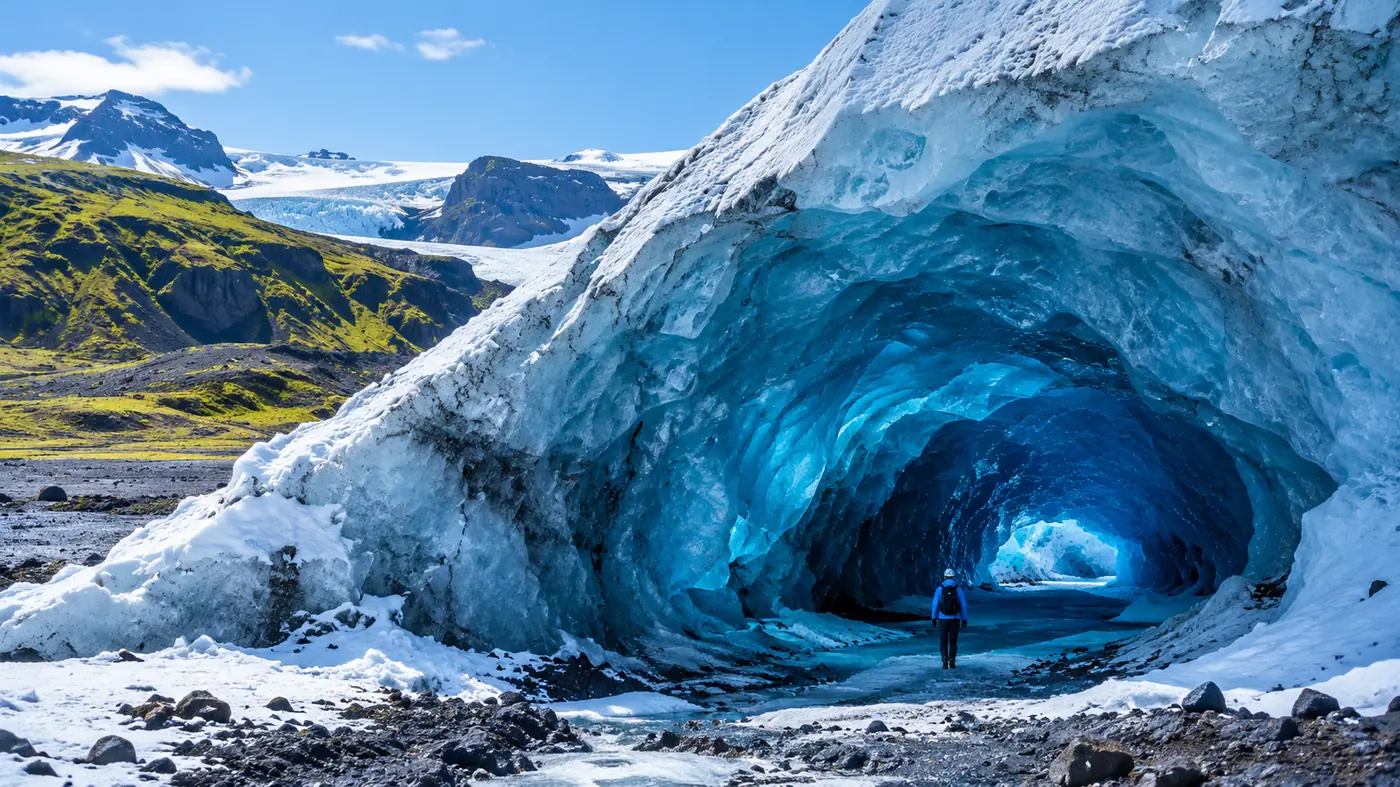
The Katla ice cave runs in every month, about half an hour by super jeep from Vík.
Check dates for the Katla ice cave tourWhat happened in the 2024 ice cave collapse?
On 25 August 2024 part of an ice cave at Breiðamerkurjökull collapsed during a tour. One man died and his partner was injured. The national park then shut all ice caves and moved to a winter-only season.
Iceland Review and AP reported that the man who died was a US citizen and that his injured partner was flown to Reykjavík. A search for two people thought to be missing under the ice was called off the next day, when the operator's list showed 23 participants, not 25. Vatnajökull National Park banned all access to ice caves until 31 October 2024.
The lasting change is the calendar. A summer cave tour in Vatnajökull is gone: the caves close in the warm months, contracts are tighter, and daily risk assessments are shared between companies. Glacier hikes on the ice surface stayed allowed in summer. The Katla cave sits outside the national park and runs all year, which makes it the summer option.
The rule we take from it is short: never go into an ice cave without a guide who has checked it that day, and never in summer meltwater on your own.
Which ice cave in Iceland is the most beautiful?
For pure blue, a Vatnajökull cave in mid-winter. For ash, drama and an open calendar, the Katla cave. They are different looks, not better and worse.
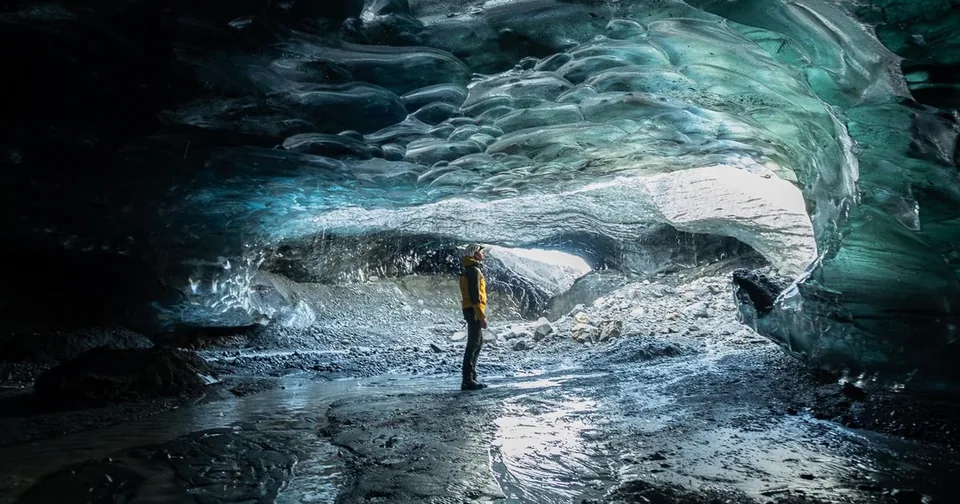
The blue in the Vatnajökull caves comes from dense old ice with very few air bubbles, and it looks best on a cold, clear day. The Katla cave is darker, layered with ash, and many reviewers like that contrast more than a uniform blue. Pick by your dates and route as much as by looks:
| If you | Pick | Why |
|---|---|---|
| Travel May to September | Katla ice cave | The Vatnajökull caves are closed |
| Stay near Vík or Sólheimajökull | Katla ice cave | About 30 km from the glacier, tours about 3 hours |
| Go east to Jökulsárlón in winter | A Vatnajökull cave | Clear blue ice, combined with the lagoon |
| Have children aged 6 to 7 | Katla ice cave | Minimum age 6 on the Arctic Adventures tour |
| Want ice under your crampons for hours | Sólheimajökull hike | Longer on the ice, no cave |
Frequently asked questions
Where are the ice caves in Iceland?
In Kötlujökull above Vík (the Katla ice cave, open all year) and in the outlet glaciers of Vatnajökull near Jökulsárlón and Skaftafell, open roughly October to April.
Is there an ice cave at Sólheimajökull?
Not on a normal glacier hike. Small seasonal caves sometimes form and a guide may show one, but the standard hike goes onto the ice, not through a cave.
Can you visit an ice cave in summer in Iceland?
Yes, the Katla ice cave from Vík runs all year. The Vatnajökull National Park caves are closed from May to September.
How long is the Katla ice cave tour?
About 3 hours from Vík, including the super jeep ride. The Reykjavík option takes about 11 to 12 hours with waterfall stops.
Ready to book
Choose your hike
Free cancellation up to 24 hours before on every option. Prices are from-prices in USD and move with the season.
From Vík: Katla Ice Cave & Super Jeep
A black-and-blue ice cave, all year per the listing
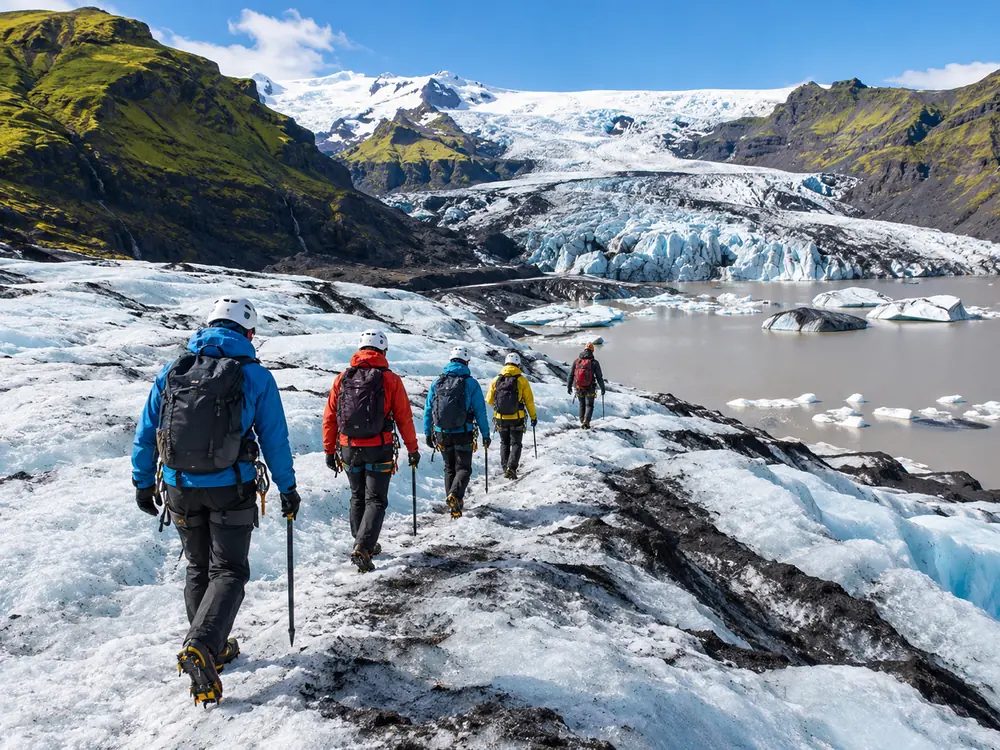
Sólheimajökull Glacier Hike, Meet at the Glacier
- Certified glacier guide
- Crampons, ice axe, helmet and harness
- Small group
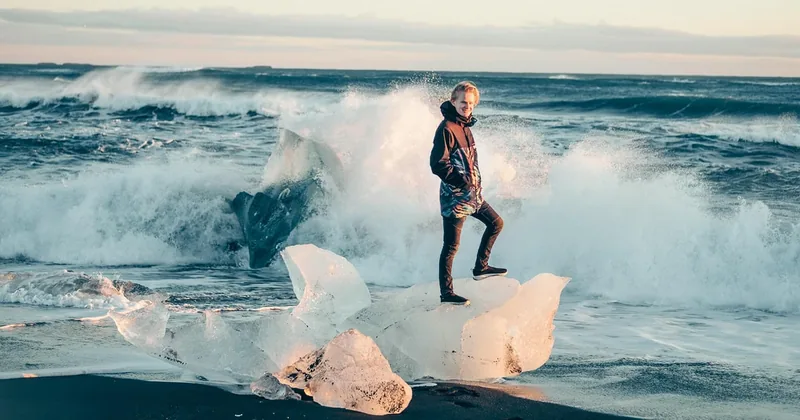
Jökulsárlón & Diamond Beach from Reykjavík
Icebergs and ice on black sand, far east